
Leader: Margaret Alcorn
Facilitators: Craig Morley, Greg O’Toole, Richard Alcorn.
We met at WTP Gate 5 on Paradise Rd. We had 3 cars, each with a GFNC member with a WTP bird watching permit. All participants adhered to the rules imposed on visitors to the WTP.
We drove down Paradise Rd and parked at the corner where it first meets Lake Borrie pausing to look at a flock of Cape Barren Geese on the way. After watching the Musk Ducks display, the many Blue-billed Ducks and a couple of Freckled Ducks we drove on to the Bird Hide at the mouth of the Little River.
The water was too high for any shorebirds, but an Australian Spotted Crake preened in the sun very close to the path providing excellent views. Then we proceeded along the coast to the Lake Borrie Outlet and the tern roost. Terns were the highlight here with Crested, Little and Fairy Terns roosting on the rocks and a very dark White-winged Black Tern flying overhead at the outlet.
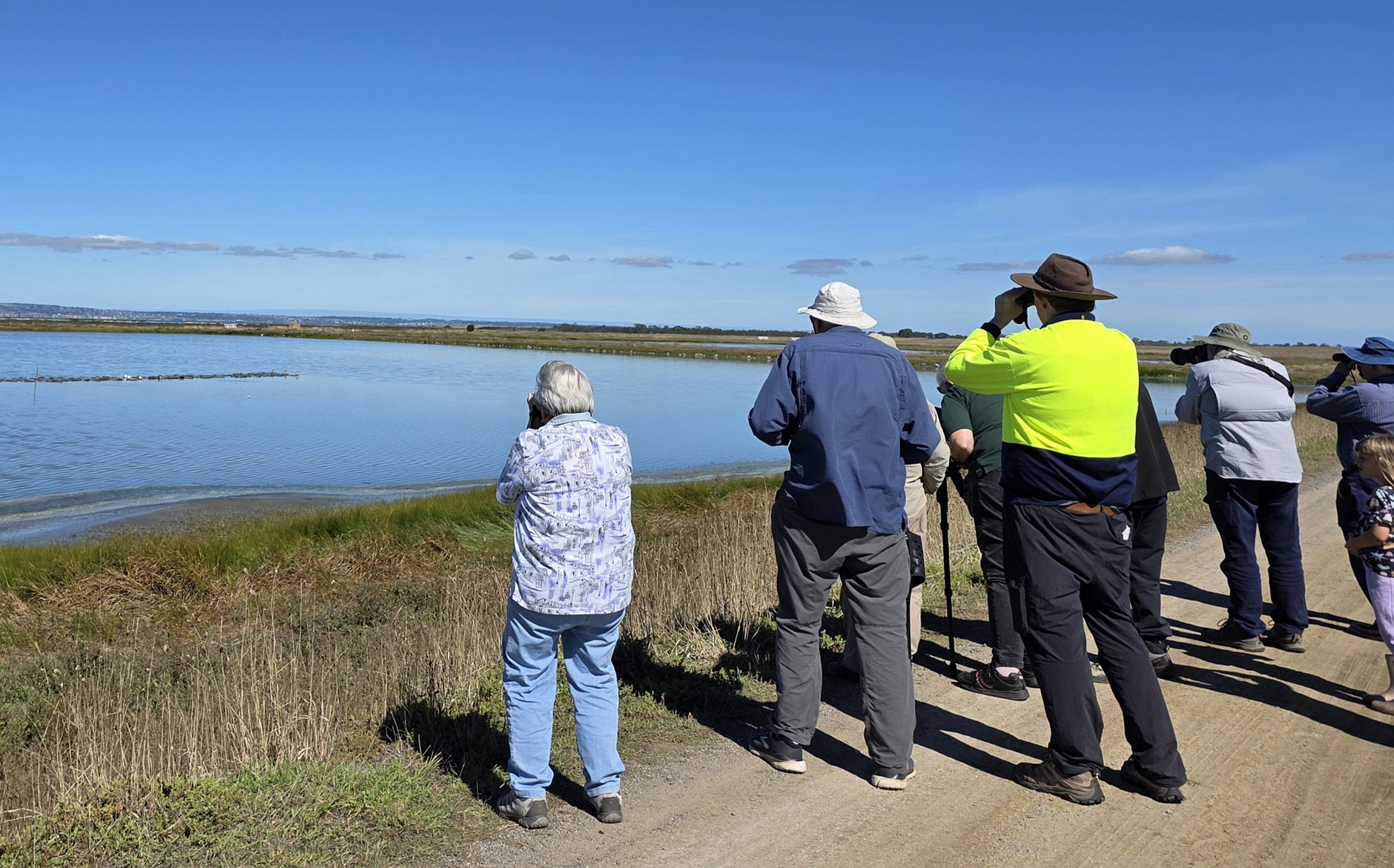
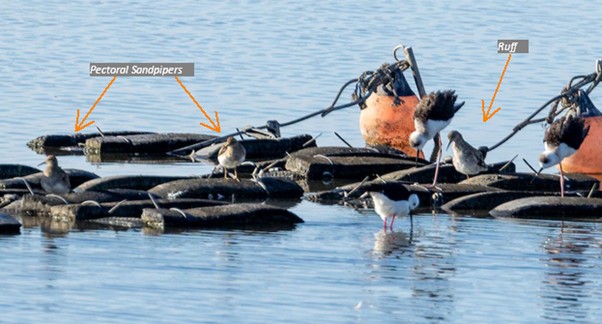
Our final stop was at T-section where there was much delight at finding a solitary Pectoral Sandpiper on the artificial platform. Around the corner a Ruff (a rarity) was the first bird we saw together with two Sharp-tailed Sandpipers at the water’s edge. In the corner of the pond a Black-tailed Godwit was feeding and in the middle of the pond a Common Greenshank was roosting. Our guests were reluctant to leave T-section as the birds were so easy to see up close but it was time to return to their parked cars at Paradise Rd. 71 species were seen overall.
eBird Checklist – 29 Mar 2026 – Western Treatment Plant.
Leaders: Alison and Phil Watson, Greg O’Toole, John Renowden
The sun was out and we had an enjoyable time showing our visitors a little of what WTP can offer. We managed to visit our six stops and arrive back in our two and a half hour time slot.
We found 64 species and thank Craig for keeping the list, and also sharing of his knowledge and careful explanations. Highlights were of course the Pectoral Sandpiper, Ruff and Black-tailed Godwit at the T-section.
We enjoyed the Little River outlet with a good view of the Little and Fairy Terns through the scope. There were many Black Kites and other raptors probably due to the nearby dead Australian Fur Seal. Our participants thoroughly enjoyed their experience ticking off Brolgas, Blue-billed Ducks, Musk Ducks and Cape Barren Geese. A very successful afternoon.
Leaders: Graham & Jenny Possingham, Barry Lingham, Jeff Dagg, Grace Lewis.
This was the last of the SEANA excursions, and the third excursion to the WTP. Given the excellent bird lists obtained by the first two excursions to the WTP, we were keen to check this outstanding birding site.
After allocating the participants into the car convoy, we set off towards the T-Section lagoons, but we quickly pulled over and savoured the sight of a flock of 10 elegant Brolgas feeding in a paddock alongside 29 Mile Road. Our next stop was at T-Section lagoons where we very quickly found our main target – the rarely seen Ruff. To add to the excitement, there were also two Pectoral Sandpipers perched near the Ruff and a Black-tailed Godwit in a nearby pond. Hundreds of Australian Shelduck were seen and many other waterfowl including Great Crested Grebes. Some other migratory waders were also present.
A drive back past Gate 5 (and the toilets) led us along Paradise Road to Lake Borrie. Cape Barren Geese were present and distant views of Freckled Duck added to our list of ‘uncommon birds’. Morning tea was eaten beside the Little River before we moved on to another part of Lake Borrie to view the vast array of ducks and other birds present.
https://ebird.org/checklist/S314623591
ABN 23 918 778 150
Incorporation No A0044963D