
Sunday afternoon
Leader: Peter Turner
Facilitator: Jill Williams
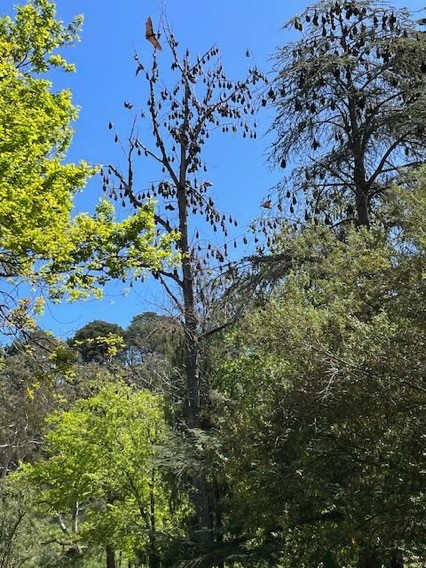
Seven field naturalists explored some of the historical and significant trees and other plants in the Castlemaine Botanical Gardens (CBG). The CBG have been placed on the Victorian Heritage Register and some of the trees are on the National Trust’s Register. Of all the several hundred trees in the gardens, the focus was on some of those highlighted in the CFNC’s brochure ‘Significant Trees in the Castlemaine Botanical Gardens’ prepared by the late George Broadway in 1998 and updated in 2022. In addition other plants and birds were noted.
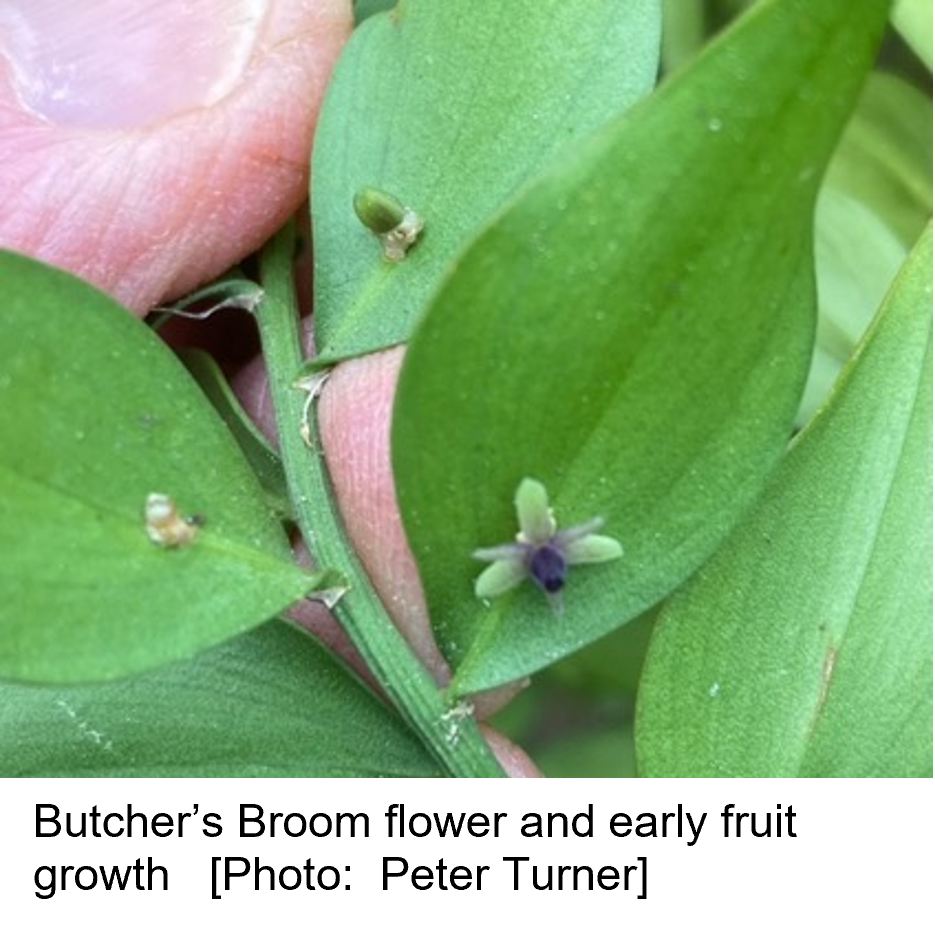
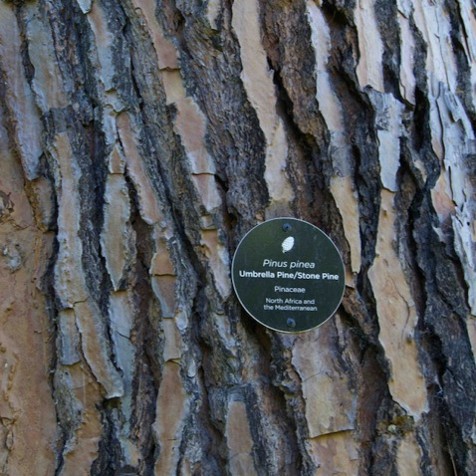
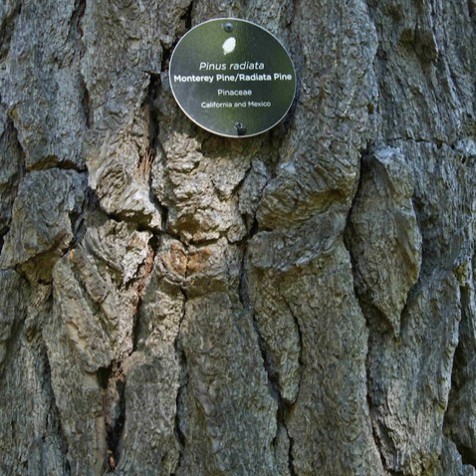
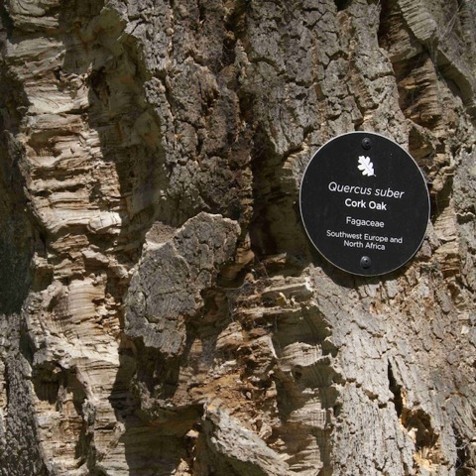
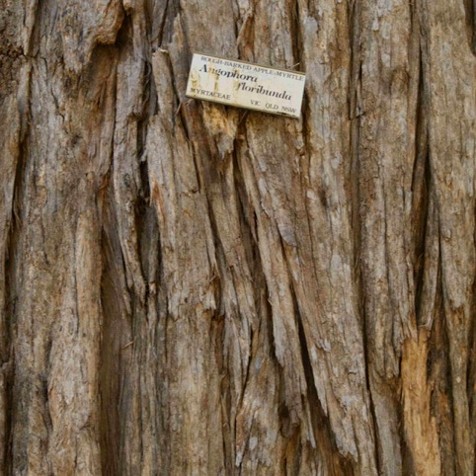
At the start the first major observation was the large population (many thousands) of Grey-headed Flying Foxes occupying the tops of many of the trees, both native and exotic. We noted the variation of textures of bark on different trees such as the Stone Pines (Pinus pinea), the Rough-barked Apple Myrtle (Angophora floribunda), the Monterey Pine (Pinus radiata) and the Cork Oak (Quercus suber). The pendulous foliage of the Mourning Cypress (Cupressus funebris) describes its appearance. The 10 or 12 examples of the Camperdown Elms (Ulmus glabra) are interesting in that every tree in the world of this species is a bud from the original branch of a tree found growing along the ground discovered at the Camperdown House at Dundee in Scotland circa 1840, and grafted onto suitable stock, usually a Wych Elm. The magnificent River Red Gum (Eucalyptus camaldulensis) is the only remaining tree in the gardens that predates European arrival. We compared two species of Podocarpus – the Plum Pine, P. elatus and the Totara, P. totara, a New Zealand endemic highly prized for its hard rot-resistant wood. Amongst several palms and shrubs noted were the hedges of Butcher’s Broom, Ruscus aculeatus, one of the many early plantings. The flattened leaf-like stems (cladodes) bear tiny flowers. A traditional medicinal plant, the stiff stems were used by butchers to clean their chopping blocks.
The birds observed included the Pied Currawong, Australian Magpie, Crimson Rosella, Masked Lapwing, Wood Duck, Pacific Black Duck and possibly some hybrids (Pacific Black duck x Mallard Duck). Sadly, the Powerful Owls were not present at this time. Other fauna observed included a Bogong Moth, a turtle (not identified) and Goldfish in Lake Joanna.
ABN 23 918 778 150
Incorporation No A0044963D